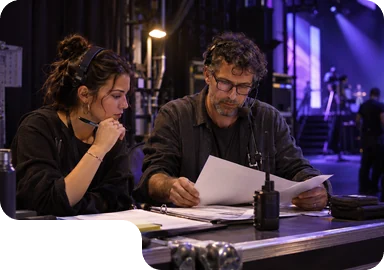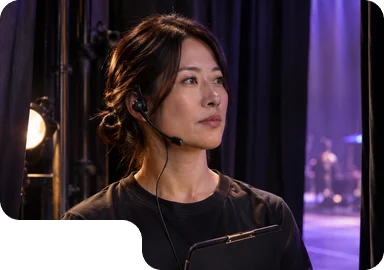
Rehearsal
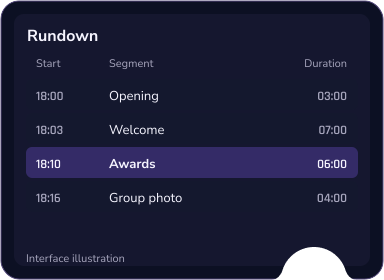
Rundown
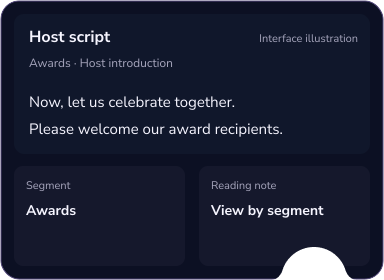
Host script
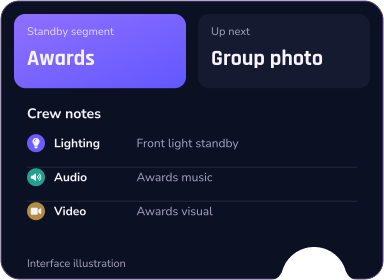
Backstage Cue
Speaker Timer
Crew actions
Rehearsal checks

For every role on your crew






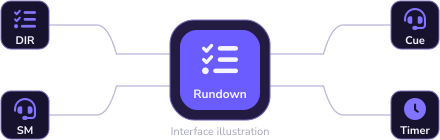
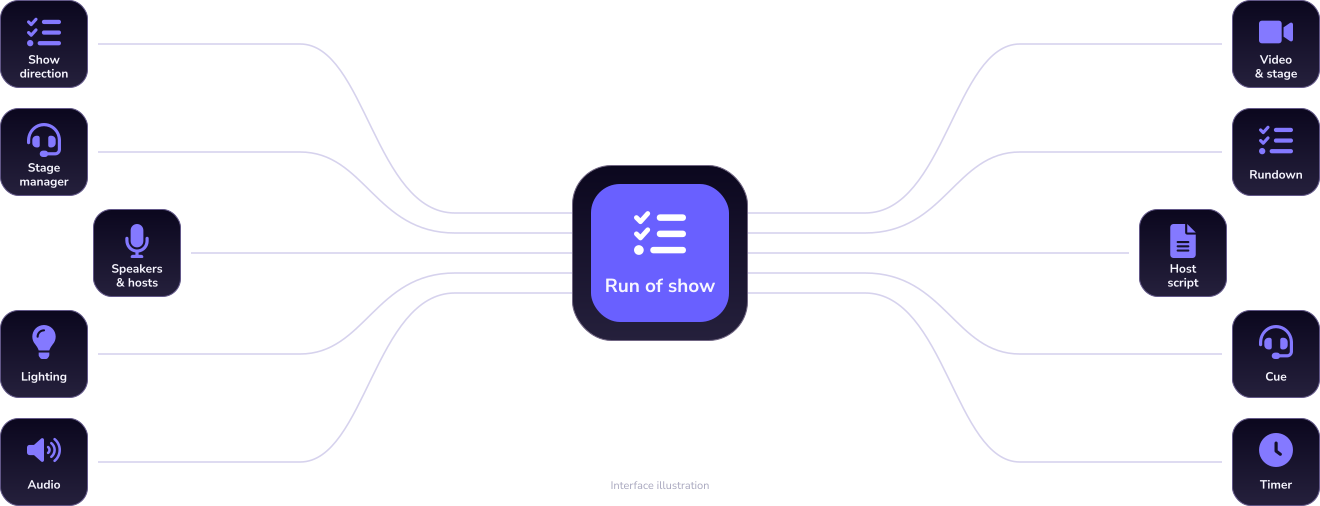
Core workflow
From plan to action
Each part in context
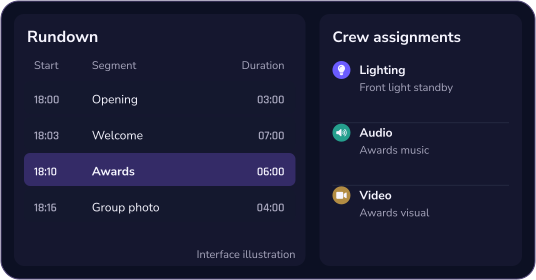
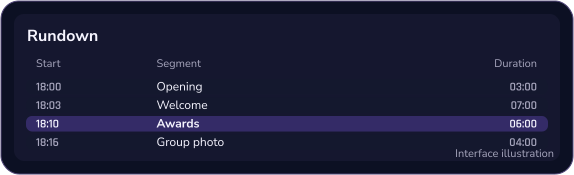
Complete rundown
Bring the running order, planned timings and crew roles into one view.

Scripts in context
Place host content with its segment, including the context for each transition.

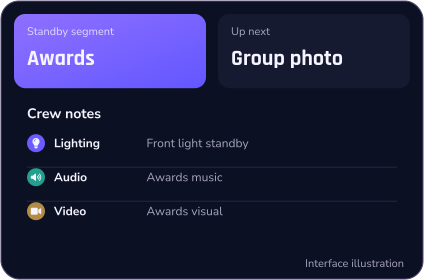
Backstage Cue
Focus on the current segment, crew actions and what needs to be ready next.
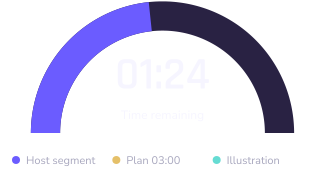
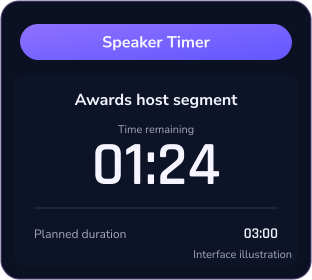
Speaker Timer
Clear time information for speakers and hosts, shaped around their delivery.
- For speakers
- For hosts
- Readable time information
 For speakers
Timer
Speakers
Hosts
Timing


From plan to show

Plan the rundown
Set out the running order, timings, scripts and crew responsibilities.
01

Rehearse the handoffs
Check timings, cues and crew handoffs in rehearsal. Note what needs to change.
02

Run the show
Follow the agreed rundown, with clear backstage actions and speaker timings.
03


How the work connects
One event. Different needs.
The rundown gives scripts, backstage cues and speaker timing a common context. Each role needs its own focus within the same show.

Use cases
Use cases
Use cases
Use cases
Use cases
Use cases
Connect the opening, speeches and launch moments with host content and technical crew handoffs.
Follow the running order, stage movements and lighting, audio and video handoffs backstage.
Bring speaker order, host links and time allowances into a clear plan for speakers and hosts.
FAQ
Explore the product
Then discuss your show
-
What is StageNow for?
StageNow is built around the complete run of show, connecting planning, rehearsal, live production and crew execution.
-
Who is StageNow for?
Directors, show callers, stage managers, speakers, hosts, and lighting, audio, video and stage crews. Start with the information your role needs.
-
How do Cue and Timer differ?
Cue is for backstage execution: the instructions and prompts around each segment. Timer is for speakers and hosts: clear time information to support their delivery.
-
Where does the host script fit?
The host script belongs with its segment, so the host can follow the content and the transition around it. Spoken content and backstage action notes serve different readers and should remain distinct.
-
Is StageNow suitable for my event?
Tell us the event type, scale, main segments, crew roles and the coordination problem you face. We can use that context to discuss suitability and confirm the relevant operating conditions.
-
Which features are available?
The website uses interface illustrations to explain the workflow. Contact us to confirm the features, devices and conditions that apply to your event.
-
How can I ask about trials and pricing?
Contact us for current trial arrangements, pricing and service scope.
-
What should I prepare before contacting you?
A sample rundown without confidential details is a useful start. Include the crew roles, rehearsal plan, timing requirements and the main problem you want to solve.



Role focus
Different roles
Working through
the same show

Follow the sequence, key timings and crew handoffs before deciding how to move the show forward.

Directors & show callers
Role focus
Focus on the current task, the next preparation and the actions each role needs to take.

Stage managers & crew
Role focus
Readable scripts and time information help speakers and hosts stay with the event’s pace.

Speakers & hosts
Role focus
Follow the sequence, key timings and crew handoffs before deciding how to move the show forward.
Directors & show callers
Role focus
Focus on the current task, the next preparation and the actions each role needs to take.
Stage managers & crew
Role focus
Readable scripts and time information help speakers and hosts stay with the event’s pace.
Speakers & hosts
Role focus

Role focus
The show. The crew.
The speaker’s time.
Planning
Show direction

Show focus
Consider sequence, timing and crew responsibilities together.
Role focus
- Running order
- Key timings
- Host script
- Crew responsibilities
- Change notes


Execution
Stage & crew
Flow focus
Check people, content and handoffs around the current task.
Role focus
- Current task
- What to prepare next
- Action notes
- On-site issues
- Confirm decisions
Hosting
Speakers & hosts
Time focus
Keep time information clear for speeches and host links.
Role focus
- Speaking slots
- Host links
- Time allowance
- Essential prompts
- Closing handoff